
#Estoicismo
111 notas · última:
A wrongdoer is often a man who has left something undone, not always one who has done something
Das Meditações IX, 5. A omissão pode ser injustiça tanto quanto o ato — definição ampliada de delito moral.
Para ser grande, sê inteiro: nada teu exagera ou exclui. Sê todo em cada coisa. Põe quanto és no mínimo que fazes
Ode de Ricardo Reis, datada 14 fev 1933 (Arquivo Pessoa 503). Estoicismo neoclássico do heterônimo horaciano de Pessoa.
O que quer que um outro disser bem, é meu
Sêneca, em carta a Lucílio, justifica que toda boa formulação alheia lhe pertence, reconhecendo logo depois que mesmo essa frase já fora dita por Epicuro.
Filosofia tem que perturbar, nunca entreter
Musônio proibia aplausos: se a plateia aplaude, o orador era músico, não filósofo. Palavras filosóficas verdadeiras devem provocar tremor e vergonha.
Cabelo e o legado oral de Musônio
Musônio defendia cortar o cabelo para que não vire fardo, citando Zenão. Não escreveu — seus discursos foram registrados pelo aluno Lúcio.
Comer para viver, não para obter prazer
Alimentação como o campo de batalha mais frequente da virtude — comemos várias vezes ao dia. Garganta e estômago são instrumentos de nutrição, não de prazer.
Carne obscurece a alma e atrasa o intelecto
Posicionamento vegetariano de Musônio: a carne é alimento de animais selvagens, suas exalações obscurecem a alma e tornam o intelecto mais lento.
Casamento é natural e compatível com a filosofia
Destruir o casamento é destruir a família e a raça humana. O amor entre homem e mulher é a forma mais elevada de amor — Pitágoras e Sócrates foram casados.
Agricultura como sustento digno do filósofo
O filósofo deve sustentar-se pelo trabalho na terra, não apenas como professor — só quem está desonrado considera o trabalho agrícola impróprio.
O exílio não rouba o essencial da vida
O exílio não rouba o que importa: natureza, virtude, amigos verdadeiros. Citando Sócrates, Musônio defende que o universo é a pátria de todos.
Mulheres devem filosofar, mas o lar vem primeiro
Musônio defende a igualdade racional entre homens e mulheres no acesso à filosofia, mas restringe o benefício ao papel de administradora do lar — limite romano do seu feminismo.
Sou humano, nada do que é humano me é estranho
Verso de Crêmes em Heauton Timorumenos de Terêncio (163 a.C.), retomado por Cícero, Sêneca, Marco Aurélio, Montaigne, Marx e Dostoiévski.
If you like doing something, do it regularly; if you don't like doing something, make a habit of doing something different.
Paráfrase dos Discursos de Epictetus (registrados por Arriano, ~108 d.C.). O contexto completo trata da formação de hábitos: toda faculdade se fortalece pelo ato correspondente — caminhar melhora o…
Who Is Zeno? An Introduction to the Founder of Stoicism
Zeno’s shipwreck led him to Athens, where Socrates and Crates shaped his turn to philosophy. He taught at the Stoa Poikile, defined happiness as a good flow of life, and was honored by the Athenians after his death.
How Do the Stoics Define Temperance?
The page defines temperance as knowing that abundance comes from having what is essential and says the Stoics often use temperance interchangeably with self-control.
Put Your Day Up For Review At Bedtime Ask
The page asks for a bedtime review of the day through four questions about principles, kindness, vices, and the cultivation of virtues.
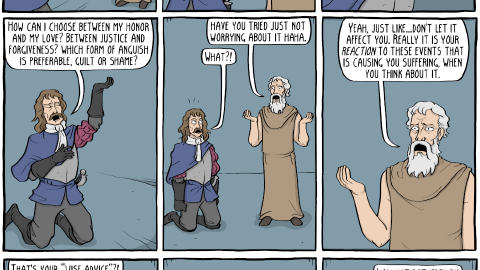
Stoic Advice
Nine-panel strip in which a betrayed man asks Epictetus for advice, is told not to let it affect him, and runs him through with a sword.
12 Rules for (a Stoic) Life
The post turns Jordan Peterson’s 12 Rules for Life into a Stoic version, listing habits of kindness, restraint, early rising, cold showers, and speaking only what is true.
Como evitar errar o que você já sabe
O texto explica que repetimos erros quando confundimos reconhecimento retrospectivo com aprendizado real e quando não levamos as lições para o resto da vida prática.
Nobody Said You Can’t Have Emotions
Margaret Graver says Stoicism is about understanding human nature and using emotions well, not becoming emotionless. Caring should be trained toward honesty, courage, and compassion.
Raging At The Wrong Thing
The email argues that anger is often aimed at things outside our control, like delays or other people, while the real target should be the small part of life we do control: our own waste and misuse of time and energy.
28 Books On Stoicism: The (Hopefully) Ultimate Reading List
A curated Stoicism reading list that ranges from primary texts and introductory guides to biographies, fiction, and links between Stoicism, therapy, and modern life.
100 Things I Learned in 10 Years and 100 Reads of Marcus Aurelius’s Meditations
Ryan Holiday reflects on a decade of rereading Meditations and says the book changed how he handles work, conflict, success, mortality, and self-discipline through Stoic practice.
The Winds May Howl
The note quotes Mike Duncan on why Stoicism returns in crisis: when chaos and disunity grow, the mind looks for cohesion, order, and a steadier place to stand.
It’s Going To Take More Than That To Stop You
The newsletter uses Theodore Roosevelt’s 1912 shooting to argue for a Stoic response to setbacks: keep going, refuse to be cowed, and treat adversity as something to work with.
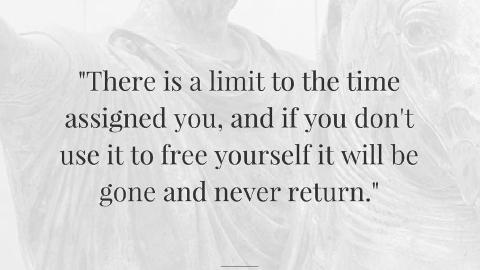
There is a limit to the time assigned you, and if you don't use it to free yourself it will be gone and never return.
Passagem das Meditações de Marco Aurélio (II, 4), na tradução inglesa de Gregory Hays, em cartão do Daily Stoic.
Do This Before Bed
The email says meaning can be built through belonging, purpose, storytelling, and transcendence, and suggests replacing bedtime social media or headlines with poetry, music, or meditation.
It’s Just You
The email says anxiety comes from inside one’s own perceptions, not from outside events, and uses Marcus Aurelius to show that the feeling can be discarded by changing how it is seen.
Amor Fati: Learning To Love And Accept Everything That Happens
The post argues that acceptance is hard because we expect life to follow our will, but real progress comes from working with what happens, not resisting it.
Doing the Work Is Enough: Stop Letting Others Dictate Your Worth
The piece argues that Belisarius shows why effort and duty should matter more than praise, rewards, or results, since outcomes depend on others and can be arbitrary.
O que aprendi com os livros que li em 2014
Paulo Ribeiro reúne livros de 2014 que, para ele, concentram aprendizado prático sobre antifragilidade, estoicismo, educação, trabalho e vida familiar, e ainda cita outras leituras recomendadas.