
Notas
Índice cronológico de todas as notas do Scholion.
5359 notas · última:
A Full-Stack Web App Using Blazor WebAssembly and GraphQL: Part 3
This part adds edit and delete support for movies, server-side sorting and filtering, and client components for movie details, cards, genres, home page, and admin management.
Let’s Make a QR Code Generator With a Serverless Function!
The article shows how to move QR code generation into a DigitalOcean serverless function so the heavy qrcode package stays off the main site bundle and the function can be called through a URL.
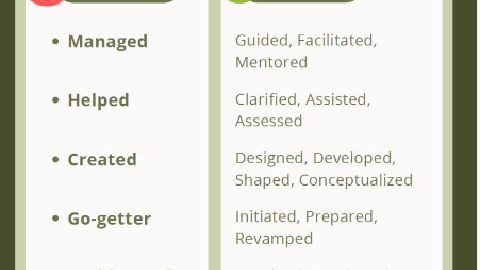
Palavras fracas no currículo
Infográfico de Priyank Ahuja com cinco palavras fracas em currículos (managed, helped, created, go-getter, problem solver) e verbos sugeridos para substituir cada uma.
Erro comum de jovens líderes: achar que só a execução importa
Texto de autoria desconhecida sobre o que cabe ao líder além da execução: alinhar expectativas, negociar apoio, estreitar relacionamento com outros líderes, tomar decisões e distribuir responsabilidades.
Building a WebAssembly-powered serverless platform
The post shows how to embed Wasmtime in a Rust HTTP service, route requests to WebAssembly modules, return strings through WASI stdout, and pass parameters via environment variables.
JavaScript Higher-Order Functions: A Complete Guide
Explains how higher-order functions in JavaScript rely on first-class functions and shows patterns for passing, returning, and combining functions, plus common built-in uses.
Stack in C# - Code Maze
The article explains Stack in C# as a LIFO collection, shows the non-generic and generic constructors, and covers Count, Push, Peek, Pop, Clear, plus thread-safe options.
5 Tips For Writing Cleaner Code
The page gives five coding habits for clearer JavaScript: avoid unnecessary nesting with early returns, destructure object parameters, prefer pure functions, keep functions focused, and use meaningful variable names.
An Alternative to Outbox Pattern for Microservices Architecture
The article proposes a 2-phase message built on DTM as an alternative to Outbox. It uses Prepare and Submit plus a check-back service to keep business execution and message submission atomic.
The setup "trick" that .NET libraries use and you should too
Nick says the video shows a C# feature that is not obvious at first glance and is used widely by ASP.NET Core and other .NET libraries to simplify how configuration details and settings are provided.
Xamarin Versus .NET MAUI
The post compares Xamarin.Forms and .NET MAUI across architecture, project structure, platform support, build tooling, rendering, resources, hot reload, graphics, accessibility, patterns, Blazor, device APIs, and multi-window support.
Resources for F# Onboarding
Curated links for learning F#, covering official docs, functional programming, code architecture, testing, performance, and people to follow on Twitter.
Building Microservices With Security in Mind
The article says microservices, open architecture, DevSecOps, and observability help banks and fintech teams ship faster while keeping security checks, testing, and monitoring inside the delivery flow.
Dependency Inversion vs. Dependency Injection
The article distinguishes dependency inversion as a principle that favors abstractions over concrete implementations, and dependency injection as a pattern that supplies those dependencies at runtime.
JavaScript Concepts Every Programmer Should Know
The article reviews core JavaScript ideas that make development easier, including arrow functions, reduce, asynchronous execution, async scripts, async/await, and promises.

Sua hora chegou
Tira em quatro quadros em que um senhor que alimenta patos com pão vê surgir um pato gigante musculoso, que o poupa enquanto uma multidão de patos grasna ao redor.
Do you really need a Staging environment?
The article weighs staging against faster, simpler release flows and argues that staging often adds cost, complexity, and delay. It keeps value mainly for hard data workflows and complex infrastructure.
Orchestration and choreography - ByteByteGo System Design
The page contrasts choreography and orchestration in microservices, showing orchestration as centralized control with transaction management and easier rule changes, but also higher latency and a single point of failure.
Hexagonal Architecture from the Ground Up
The article contrasts layered architecture with hexagonal architecture and argues that ports and adapters keep domain logic at the center, make boundaries cleaner, and support easier testing and change.
Why You Should Care About Software Architecture
The article argues that software architecture still matters in agile work because products need explicit attention to quality attributes, sustainability, and architectural decisions that otherwise emerge implicitly and decay over time.
TypeORM: Object-relational mapping with Node.js
The article explains what an ORM is, why it helps with data-driven API work, and how TypeORM brings TypeScript support, decorators, and multiple ORM patterns to Node.js projects.
How To Configure Swagger In Azure Functions APIs
The article shows how to add Swagger UI to Azure Function HTTP APIs by installing Swashbuckle packages, creating Swagger endpoints, configuring startup, and testing locally and in Azure.
Object-Oriented Programming Explained Like Never Before
The article defines OOP in JavaScript and walks through classes, objects, abstraction, encapsulation, inheritance, and polymorphism with car and student examples.
JArray.SelectTokens Examples
The page shows C# examples of JArray.SelectTokens with JSONPath queries for nested properties, scans, wildcards, slices, index lists, and value filters over arrays.
Visual Studio on an ultra-wide monitor
The post shows how ultra-wide monitors can be used in Visual Studio with layouts that balance code, tool windows, and the app being worked on, plus full screen mode and saved layouts.
Create a Discord Bot in Python
The tutorial shows how to set up a Discord application, install Python dependencies, and build a bot that replies to simple messages and handles Minecraft commands for help, server status, load, and online players.
Interview question: Design Twitter (Episode 5)
The newsletter contrasts process and thread, outlines a 2013 Twitter system flow, sketches database categories by workload, and lists ID generator requirements for social platforms.
The Array Methods Coming to JavaScript in 2022
The article explains a Stage 3 proposal that adds non-destructive array methods to JavaScript so code can copy an array and then reverse, sort, splice, or replace one item without mutating the original.
Memoization in JavaScript
The article introduces memoization as a speed optimization technique that caches results for repeated inputs, then shows a simple `myMemoize()` wrapper for reusing computed outputs and optionally binding context.
Software Engineering Principles
The post introduces core software engineering and OOP ideas, then ties them to SOLID, composition, DRY, KISS, YAGNI, and UML-based modeling for cleaner, more maintainable code.
103 Bits of Advice I Wish I Had Known
Kevin Kelly compiles 103 short pieces of advice on work, relationships, habits, money, leadership, curiosity, and aging, framed as a birthday gift and guided by what he says he has learned by age 70.
I find it's better to ask very specific questions than very general questions.
Comentário de Veris Pflueger-Prasarntree no LinkedIn com perguntas para fazer ao entrevistador, defendendo perguntas específicas em vez de gerais, sobretudo quando o assunto é cultura da empresa.
14 Actionable Tips For Developer Productivity
Prismic argues that developer productivity comes from better tools, automation, focus, and steady learning, while avoiding multitasking, distraction, and burnout.
How to fix decimals arithmetic in JavaScript
Explains why decimal sums and subtractions can produce unexpected results in JavaScript, and shows two fixes: decimal libraries or scaling values before computing.
Húbris
Conceito grego de descomedimento, orgulho e arrogância que ultrapassa a medida, rompe a ordem e costuma ser punido pelos deuses ou pelo destino.
How to Write Programs Without Bugs
The article explains Test-Driven Development as writing tests before code, then building and refactoring feature by feature to reduce bugs, avoid overbuilding, and make changes safer.
C# attributes you should know #2: [DebuggerStepThrough] and [DebuggerHidden]
The post explains how [DebuggerStepThrough] lets code run without being debugged, how [DebuggerHidden] hides code from the debugger, and how they differ in the Call Stack.
Entendendo o Princípio da Responsabilidade Única
O texto explica o Princípio da Responsabilidade Única como a ideia de que cada classe deve ter um único motivo para mudar. Um exemplo com menu e funcionários mostra como separar responsabilidades melhora a coesão.
Learn CRUD Operations in JavaScript by Building TODO App
The page explains CRUD as create, read, update, and delete, then walks through two JavaScript projects: a social media post demo and a todo app that use form validation, template literals, and local storage.
3 Design Patterns Every Developer Should Learn
The article presents design patterns as reusable approaches to recurring software problems and recommends Strategy, Singleton, and Observer as patterns every developer should know, while warning against overusing them.