
Notas
Índice cronológico de todas as notas do Scholion.
5359 notas · última:
A importância dos livros do Napoleon Hill na minha vida ultimamente
A autora relaciona uma crise pessoal à necessidade de mudar o modo de pensar, e diz que os livros de Napoleon Hill reforçaram a ideia de mente, prosperidade e organização mental como parte da realização.
O GTD tem 5 hábitos – vida organizada
O texto propõe ler o GTD como cinco hábitos — capturar, esclarecer, organizar, refletir e engajar — e diz que usar o método depende de prática contínua, com revisão semanal e decisões confiantes.
Veja por que as pessoas perdem prazos e como resolver esse problema
O texto aponta cinco causas para perder prazos, como subestimar o tempo, dispersar datas em vários lugares, aceitar demandas demais e deixar tudo para a última hora, e propõe revisar e centralizar o planejamento.
O conceito de comida confortável – vida organizada
A comida confortável é associada a nostalgia, preparo simples e valor afetivo. O texto relaciona esse hábito a emoções, cultura, culpa e exemplos comuns no Brasil e nos Estados Unidos.
Como o GTD dá suporte à sua criatividade?
A página reúne ideias de um webinar com David Allen sobre como o GTD ajuda a criatividade ao capturar ideias, esclarecer o que foi capturado, criar contextos para produzir e usar ferramentas e brainstorms.
Minha checklist semanal – vida organizada
A autora mostra como organiza sua checklist semanal no Todoist com base no GTD, separando revisão, planejamento da semana e ações recorrentes que já fazem parte da rotina.
estudando inglês – vida organizada
A autora mostra como organiza o estudo de inglês com GTD em vários horizontes: aulas e tarefas no dia a dia, projeto do módulo, área de foco de idiomas e objetivos ligados à carreira e à leitura.
Voltei para o Todoist – vida organizada
A autora voltou a usar o Todoist porque, num período de transição no trabalho, percebeu que o fluxo de listas e o controle de prazos ficaram mais fluidos do que no Evernote.
Como relaxar ao final de um longo dia
A autora sugere um pequeno ritual de transição no fim do expediente para desligar a mente, trocar de roupa, criar um clima calmo, beber algo e retomar as tarefas de casa com mais tranquilidade.
What’s Up With Serverless?
The page argues that new software should start serverless to cut operational costs, improve reliability, and let teams focus on product work while cloud services handle scaling and infrastructure.
Image Flow 0.9 – Cool Javascripts By Ethical Swinger Coders
The page presents Image Flow as a Cover Flow-inspired JavaScript effect with keyboard, mouse wheel, and drag navigation. It lists no dependencies, free use, and small size, and notes that lightbox support is not built in.
10 Refactorings to Boost your Clean Code Skills
The article argues that clean code grows from small refactorings. It groups common changes into extract and move operations, then shows how each one helps make code clearer, safer to change, and easier to read.
6 Characteristics of Successful Senior Engineers
The page lists six habits it associates with successful senior engineers: understanding scope, prioritizing work, documenting decisions, collaborating across functions, asking questions, and maintaining a growth mindset.
JavaScript Visualized: Prototypal Inheritance
Explains how JavaScript objects inherit through the prototype chain, why built-in methods are available on strings, arrays, and objects, and how constructor functions, classes, and Object.create relate to that model.
3 Simple but Effective Ways to Stop Sabotaging Yourself
The article says negative self-talk fuels an inner saboteur that grows with fear, and argues that awareness, renewed confidence, and letting go of perfection help people move forward.
Putting SOLID into Perspective
The post treats SOLID as a useful but limited heuristic, not a set of rules, and compares it with CUPID and other design tools like RDD, GRASP, DRY, code smells, and Tell, Don’t Ask.
The Structure of Patterns
The post explains the three-part definition of a pattern and walks through the 13-step structure used in classic pattern books, using the Strategy pattern in C++ as the example.
A scarcity mindset alters neural processing underlying consumer decision making
An experiment inducing scarcity and abundance mindsets found no overall change in bids, but scarcity sharpened reliance on retail price and changed OFC and dlPFC activity during consumer choice.
WTF is Evolutionary Architecture?
The page defines evolutionary architecture as guided, incremental change across dimensions, using prioritised concerns, fitness functions, and observability to keep change predictable rather than chaotic.
How To Implement a TypeScript Web App With Clean Architecture
The article explains how to structure a TypeScript web app with core, data, presentation, and DI layers so logic stays independent of frameworks, storage, and other details.
A Company banned me because I made their Electron App running inside Docker
The article tells how the author got Tinkerwell running inside Docker on Linux, then describes a support dispute with BeyondCode after he asked questions about indexing and auto-completion.
SOLID: The First 5 Principles of Object Oriented Design
The article defines SOLID and explains each principle with PHP examples, showing how they improve extensibility, reduce coupling, and keep classes focused as software grows.
‘The best thing we can do today to JavaScript is to retire it,’ says JSON creator Douglas Crockford
Douglas Crockford says JavaScript has become a barrier to progress because the language and its ecosystem keep growing more complex, and he argues the web needs a new language and a redesigned browser interface.
Advice for Less Experienced Software Engineers in the Current Tech Market
The article says the market is especially hard for entry-level software engineers and recommends widening applications, joining support groups, building experience, and taking the first offer that comes.
Code Review Best Practices
The article argues that code reviews work best when they are fast, focused on readability and breaking changes, supported by automation, and preceded by a clear, small, and tested pull request.
React code conventions and best practices
The page lists React conventions focused on consistent formatting, explicit naming, smaller components, separation of logic from rendering, and preferring declarative code and abstractions over direct library use.
Code Smell 155 — Multiple Promises
Waiting for promises one by one creates indeterminism and a performance bottleneck. If all results are needed, they should be awaited together with Promise.all.
Ergonomic tips from over-full-time programmer
The author shares ergonomic habits that helped him code for long periods: adjustable standing desk, good keyboard and shortcuts, simple chair, large monitor, bright light control, good shoes, and hand exercises.
The Simplest Case for Unit Tests: Pure Functions
Pure functions are easy to cover with unit tests because their output depends only on inputs. The article shows how tests expose edge cases in strings, money calculations, and math operations.
What Trivago Learned Adopting TypeScript
Trivago says the TypeScript migration slowed coding at first, but improved discipline and confidence. The team leaned on GraphQL schema types and warned that loose type casting can hide runtime bugs.
The Importance of Clean Code in Your Startup's Success
The post argues that clean code helps startups win investor, customer, and partner trust, while reducing tech debt and making changes easier. It also lists basic habits for keeping code readable, consistent, and maintainable.
How to communicate as a software engineer
The article argues that clear workplace communication is mostly about brevity, structure, and empathy: use bullets, edit before sending, leave out minutiae, and put the most important information first.
How to Convert an Image to ASCII Art with Python in 5 Steps
The article explains a simple Python workflow for turning an image into ASCII art by mapping character density to pixel brightness, using Pillow to read pixels, and writing the result to a text file.
14 Patterns to Ace Any Coding Interview Question
The article groups coding interview questions into 14 recurring patterns, showing how to identify each one and which kinds of problems it fits, so practice can focus on templates instead of isolated drills.
SOLID Principles: The Beauty of Design Pattern Series
The page presents SOLID as a set of OOP concepts for making software easier to change, and links poor design to rigidity, fragility, duplication, slow modules, and unnecessary complexity.
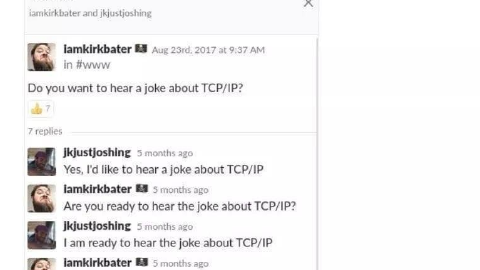
This image is a TCP/IP joke
Tweet de Kirk Bater (@KirkBater), de janeiro de 2018, com o print de uma thread em que a piada sobre TCP/IP só é contada depois de pedidos e confirmações de recebimento. O texto do tweet se apresenta como uma piada sobre UDP.
Setup VSCode for Elixir Dev
The page recommends a VS Code setup for Elixir and Phoenix development: ElixirLS and Phoenix Framework as must-have extensions, Elixir Test as a helpful add-on, and Tailwind CSS IntelliSense for Tailwind users.
Create your own AWS lambda function (Server-less)
The page walks through creating a Hello World AWS Lambda in us-east-1 with Node.js 14.x, then deploying and testing a handler that returns a JSON response with statusCode, body, and headers.
Create a Minimal Web API With ASP.NET Core and Publish To Azure API Management With Visual Studio
The tutorial shows how to create a minimal ASP.NET Core Web API with .NET CLI or Visual Studio 2022, then publish it to Azure App Service and import it into Azure API Management.
11 Powerful JavaScript One-Liners Worth Knowing
A set of 11 JavaScript one-liners for counting characters, checking empty objects, waiting, comparing dates, redirecting, handling touch support, DOM insertion, shuffling arrays, reading selected text, random booleans, and averaging arrays.