
Notas
Índice cronológico de todas as notas do Scholion.
5359 notas · última:
A complete guide to async programming in C#: understand threading, non-blocking I/O, await behavior, and best practices with ConfigureAwait
Stalin walks through what async/await does under the hood in C#, from thread pooling and await's resume point to SynchronizationContext, ConfigureAwait(false), and CancellationToken.
99% of frontend devs don't use this
Antonio Moruno Gracia argues data-* attributes beat closures inside React's .map() when React.memo or useCallback need a stable function reference to actually work.
35 Tech Lead Interview Questions (With Sample Answers)
Indeed's tech lead interview list splits 35 questions into three groups and walks through five sample answers, two of which name a concrete technique (SMART goals, cost research before adopting new tools).
33/60 Days System Design Questions
A daily.dev system design prompt: an order service that only stores current state can't reconstruct a billing dispute, and the post argues event sourcing is the real fix, not a patch.
After two years of vibecoding, I'm back to writing by hand
Mo Bitar traces two years of AI coding through excitement, spec docs, and what he calls slop, and explains why he went back to writing most of his code by hand.
AWS vs. Azure vs. Google Cloud: The Ultimate Free Tier Battle & Survival Guide
A side-by-side of AWS, Azure, and GCP free tiers: compute, databases, and the hidden billing traps (orphaned volumes, static IP tax, data egress) each provider uses to monetize free users.
The Secret Life of JavaScript: The Generator
Explains JavaScript generator functions through a teaching dialogue: the yield keyword, the {value, done} object, the iterator protocol, and passing values back in via .next().
Unpopular Opinion: I stopped coding on weekends and my career got better
A senior developer describes closing the laptop every weekend for a year, and how the boundary sharpened his focus, made him a better colleague, and led to a promotion.
Should Junior Developers Still Learn JavaScript the Hard Way?
Argues junior developers should still learn JavaScript fundamentals — closures, scope, the event loop — before frameworks, blaming boring teaching, not the material, for why it feels pointless.
Inside China's Real Advantage: Manufacturing at Scale
Notes from a factory tour of Liyang, China's battery capital: manufacturing edge as an engineered system where speed and scale outrank near-term profit.
Loyalty Is Dead In Tech - by Nikunj Kothari - Balancing Act
A VC argues the unwritten loyalty pact between founders, employees, and investors is broken, citing acquihires, founders leaving on the eve of exits, and funds backing rival startups.
12 Predictions for 2026 | Tomasz Tunguz
A VC's twelve bets for 2026: AI agents outearning people, a record IPO year, agent-first web design, and Cloudflare as gatekeeper of agent payments.
Code is cheap. Show me the talk.
Kailash Nadh argues LLMs made code abundant and cheap, so accountability, provenance, and the ability to think and articulate now matter more than the code itself.
The Slow and Quiet Cognitive Atrophy of a Modern Software Engineer
AI-generated code looks clean and its own tests pass, but skipping the review step quietly erodes an engineer's own skill. Elmar Chavez traces the decay and argues discipline is what keeps understanding intact.
The beauty and terror of negative feedback
A first conference talk gets mostly praise, then a bare anonymous 4/10 review. Amanda Mayfield traces why it stung and turns the discomfort into a plan to redesign the talk.
How we built a desktop companion robot with Gemma 4 and Raspberry Pi
A LEGO-bodied desk robot switches between a local Gemma 4 model for instant private chat and cloud Gemini for harder reasoning, its eyes and motors driven by a five-state machine.
Don't make Tech your entire personality
Developers who socialize mainly at tech meetups lose practice talking to people outside that circle. Tanay Dwivedi's fix: offline hobbies, Toastmasters, and old friends, treated as ends in themselves.
12 Hard Truths About Coding I Learned the Hard Way After 10+ Years
Twelve lessons from a decade of coding: estimates are guesses, seniority means more meetings, and almost every failed project traces back to a communication problem.
10 years of Apple text editor solo dev
A decade building Paper, a native Mac/iOS text editor, alone: why native beat Electron, why cosmetic-only paid features, why one release a month.
10 fun conversation topics for a great first date
A list of first-date questions built to skip small talk and get straight to values, habits, and turning points.
Como liderar times remotos e distribuídos?
Roberta Arcoverde descreve dez anos liderando times remotos: confiança como prática, não microgerenciar pelo resultado, e escrever tudo em vez de decidir em DM.
Celeris-1's Diffusion Bet on Speed
Celeris-1 swaps autoregressive generation for diffusion, claiming 15x faster responses than GPT-5-mini at a slightly lower MMLU-Pro score.
TypeScript: Type vs Interface
Interfaces merge and extend; types cover unions and tuples but can't be redeclared. Nevzorov's rule: interface for growth, type for flexibility.
MiniMax M3 and the Cost of Long-Context Agents
MiniMax M3's sparse attention keeps per-step cost flat as context grows, making multi-hour autonomous agents affordable in production.
I don't like LLMs
Fowler feels both fascination and fear about AI, but talking to LLMs directly leaves him with one dominant reaction: dislike, traced mainly to the Silicon Valley culture that shaped these models.
Pesquisa Viva: Guia Geral para Espanha
Arcabouço para quem considera migrar para a Espanha: marcos históricos, comunidades autônomas, diferenças culturais e os pontos-cego do olhar brasileiro e português sobre o país.
Pesquisa Viva: Ileísmo
Em que o ileísmo (illeism, falar de si em terceira pessoa) é útil, que embasamento científico tem, e quais são ileísmos famosos?
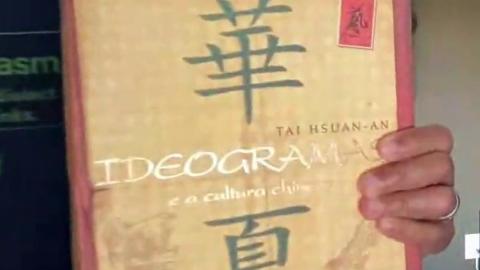
XIII Encontro de Chinês Instrumental
Anotações do décimo terceiro encontro de Chinês Instrumental, conduzido por Si Fu, com Claudio Teixeira, Thiago Silva e Daniel Araújo. Tópicos percorridos: o ideograma dentro do quadrado e a noção de forma lateral, a decomposição de Faat 法 como a água que varre, os cinco elementos chineses contra os quatro ocidentais, as três energias contidas no homem e as duas externas a ele, o ideograma de humanidade como pessoa mais dois, a leitura dos domínios pelos elementos, o caminho do Sei Jong ao Maai Saang Jong, a elasticidade da interpretação, a etimologia como mecanismo de lembrança, o cuidado com a internet e com a inteligência artificial, e interno e externo lidos como direção.

Mirante D'Ilha
Miradouro Ribeira D'Ilhas, perto da Ericeira

Restaurante Ribbai

Casa velha da esquina

Tasquinha de Magarelos
Restaurante com esplanada e vistas agradáveis
The singularity, therefore, will be bottlenecked on signal. The output of the R&D produced by an isolated data centre of geniuses would be a mere "Goodhart Singularity": Goodhart's law: when a measure becomes a target, it ceases to be a good measure. An isolated AI improving itself against benchmarks would only appear to be approaching superintelligence, while actually optimising for eval performance that fails to generalise beyond the lab.
Passagem de Tom Reed no ensaio “The Goodhart Singularity”, publicado em 2026 no Substack Meagre Protestant History, ao discutir benchmarks de IA, sinal e autoaperfeiçoamento.
Software is about to eat the world much faster
Marc Andreessen argues that software is moving from human-speed creation to compute-speed creation through coding agents, which is raising engineer leverage and accelerating automation across industries.
I Never Want to Use Third-Party Software Again
The essay argues that software is moving toward hyperpersonalization: people will increasingly tune tools, workflows, and content for themselves rather than rely on uniform third-party products.

XII Encontro de Chinês Instrumental
Anotações do décimo segundo encontro de Chinês Instrumental, conduzido por Si Fu, com Claudio Teixeira, Thiago Silva e Daniel Araújo. Tópicos revisados: a diferença entre transliteração, tradução e interpretação, a origem budista do Sam Faat 心法 como um método de transmissão entre outros, sua mecânica nas caminhadas com o mestre, o silêncio como campo de reflexão, as categorias idioma, dialeto e língua, os tons e a convenção de escrita da linhagem, os ideogramas Sam (coração/mente) e Fat (método), o fonetismo por trás dos nomes chineses de países, e o pensamento chinês organizado por movimento, não por posição.
To think is to forget differences, generalize, make abstractions.
Frase de Jorge Luis Borges no conto “Funes el memorioso”, publicado em 1942 e reunido depois em Ficciones, livro lançado em 1944 pela Editorial Sur.

XI Encontro de Chinês Instrumental
Anotações do décimo primeiro encontro de Chinês Instrumental, conduzido por Si Fu, com Claudio Teixeira e o novo participante Daniel Araújo. Tópicos revisados a pedido de Claudio: Mandarim como idioma oficial, Cantonês sem sistema de transliteração próprio, a Denominação Moy Yat Ving Tsun como jargão de compromisso, o Cantonês relevante pela província de Guangdong e não pelo toisanês de Si Taai Gung, o papel do contexto contra a homofonia e os tons, a escuta chinesa contida, a língua chinesa como ordenadora do pensamento, o caso do ideograma de Lap Sau fora do MDBG, e o fechamento sobre revisão e prontidão.
Tupã: do trovão ao Deus catequético
Tupã era o trovão dos tupi-guarani. O catecismo jesuítico do século XVI o elevou a Deus único; a cosmologia guarani documentada por Cadogan aponta outro centro, Ñamandu.
How to Design a Notification System: Frontend + Backend
The post maps a notification system as a five-layer pipeline with backend fan-out, priority handling, idempotency, rate limiting, capacity estimates, and frontend delivery concerns tied to trust and scale.